01
Title / catalog item
The movie or series identity enriched with public metadata.
Product Engineering Case Study
Private source · Production deployed
A full-stack collection platform built around the ownership details generic movie catalogs flatten away.
“Which edition, format, quality, and collection context do I own?”

Product Engineering Case Study
Product Engineering Case Study · Private Source
Cinema Vault is a production-deployed movie collection platform built to answer a more useful question than “Do I own this movie?”
“Which edition, format, quality, and collection context do I own?”
Executive Snapshot
Cinema Vault began as a personal collection-management problem. Existing tools were good at cataloging titles, but less useful for tracking the way a real collector thinks about ownership.
The outcome is a production-deployed full-stack application with owner-scoped authentication, persistent relational data, TMDB enrichment, edition-aware workflows, box-set grouping, wishlist conversion, responsive UI, and tested security controls.
The Problem
A simple movie list breaks down when one title exists in multiple physical or digital editions. Collectors distinguish DVD, Blu-ray, 4K UHD, SD, HDX / HD, and 4K—not as decorative tags, but as the definition of what they actually own.
Box sets need to behave as meaningful collections. Duplicate editions need review. External metadata should reduce data entry without replacing the owner’s record.
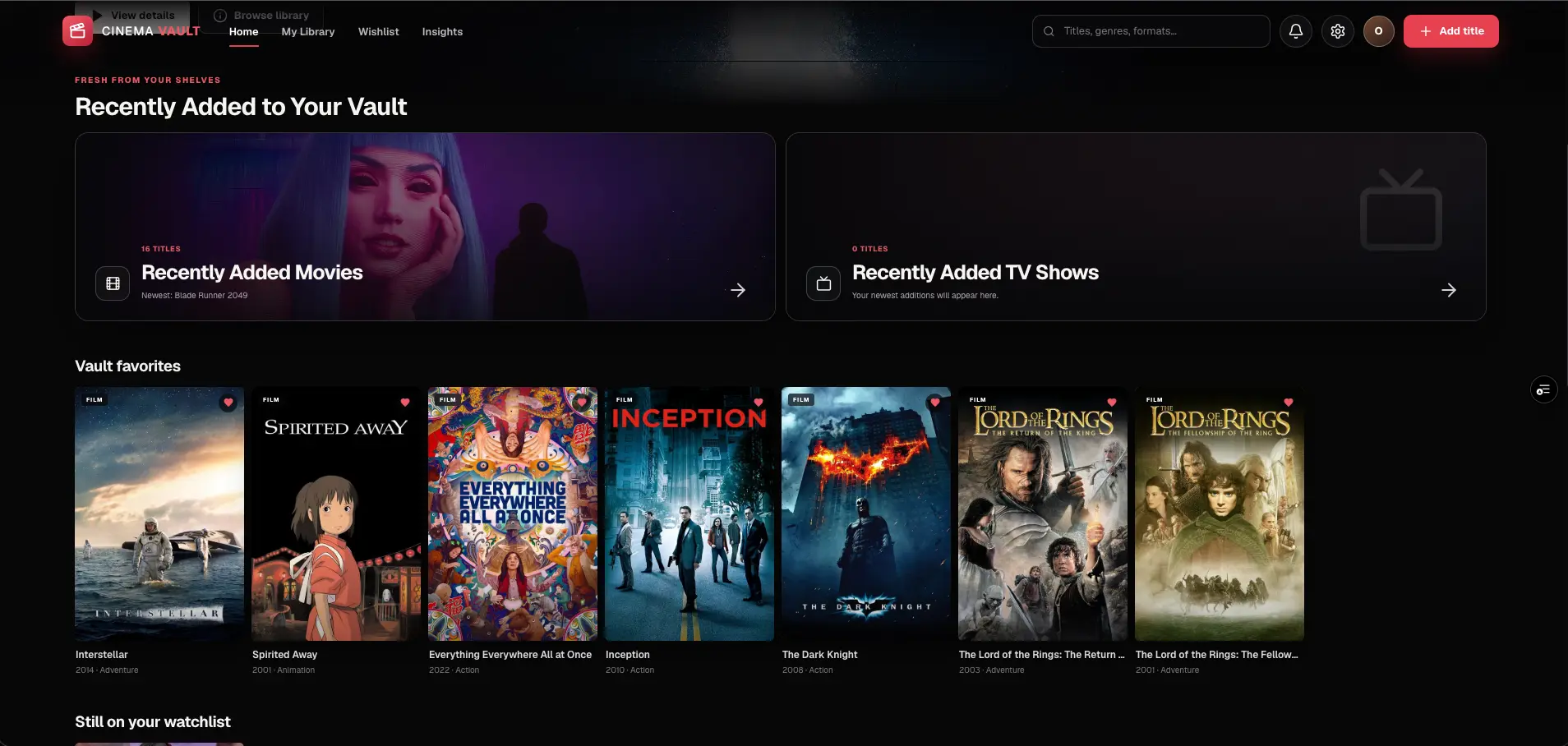
Product & Domain Model
The catalog identity supplies context. The ownership model supplies truth. Cinema Vault keeps those responsibilities separate so one title can support several real-world editions without flattening them into a yes-or-no answer.
01
The movie or series identity enriched with public metadata.
02
A distinct copy or license attached to the catalog identity.
03
DVD, Blu-ray, 4K UHD, and other tangible formats.
04
SD, HDX / HD, or 4K quality tracked per digital ownership.
05
A meaningful collection that groups editions without erasing them.
06
Acquisition intent that can move cleanly into ownership.
07
A deliberate checkpoint for potentially overlapping editions.
08
TMDB context that assists entry without owning collection state.
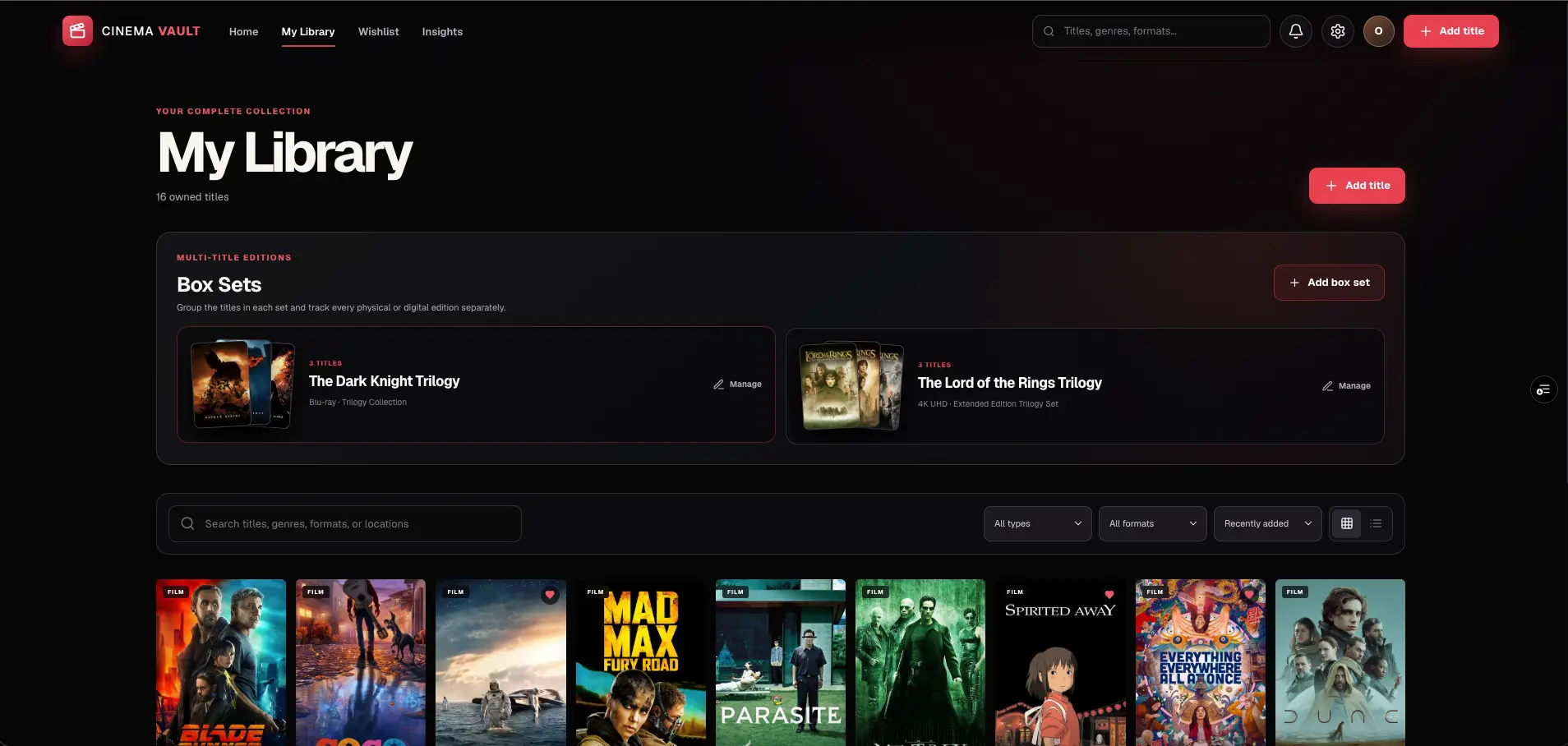
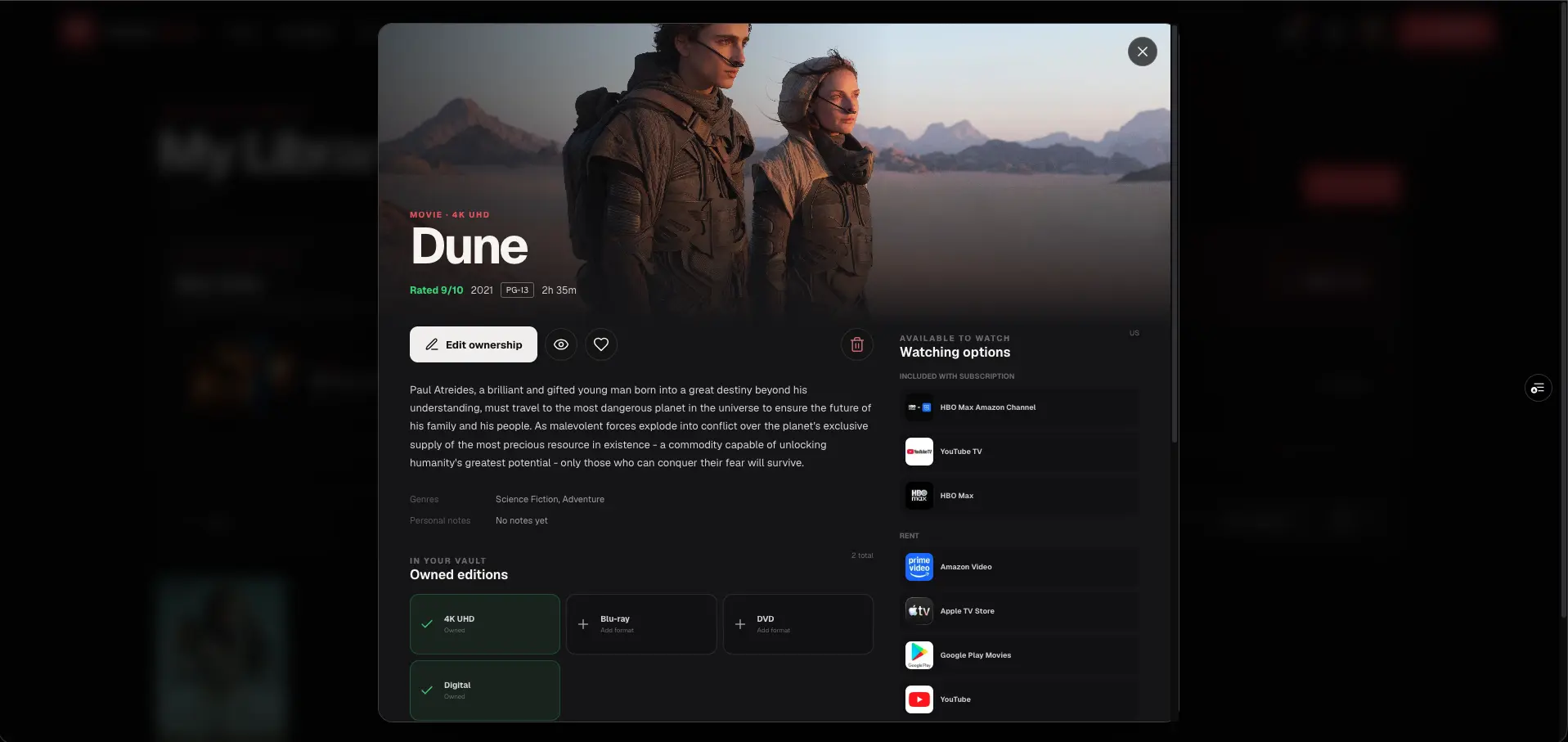
Edition-Aware Ownership
The detail experience combines enriched title metadata, streaming availability, and editable ownership state without confusing one for another. A title can carry a 4K UHD copy and a digital license with HDX quality at the same time.
That distinction answers the collector’s next question—what version is on the shelf or in the digital library—rather than stopping at owned=true.
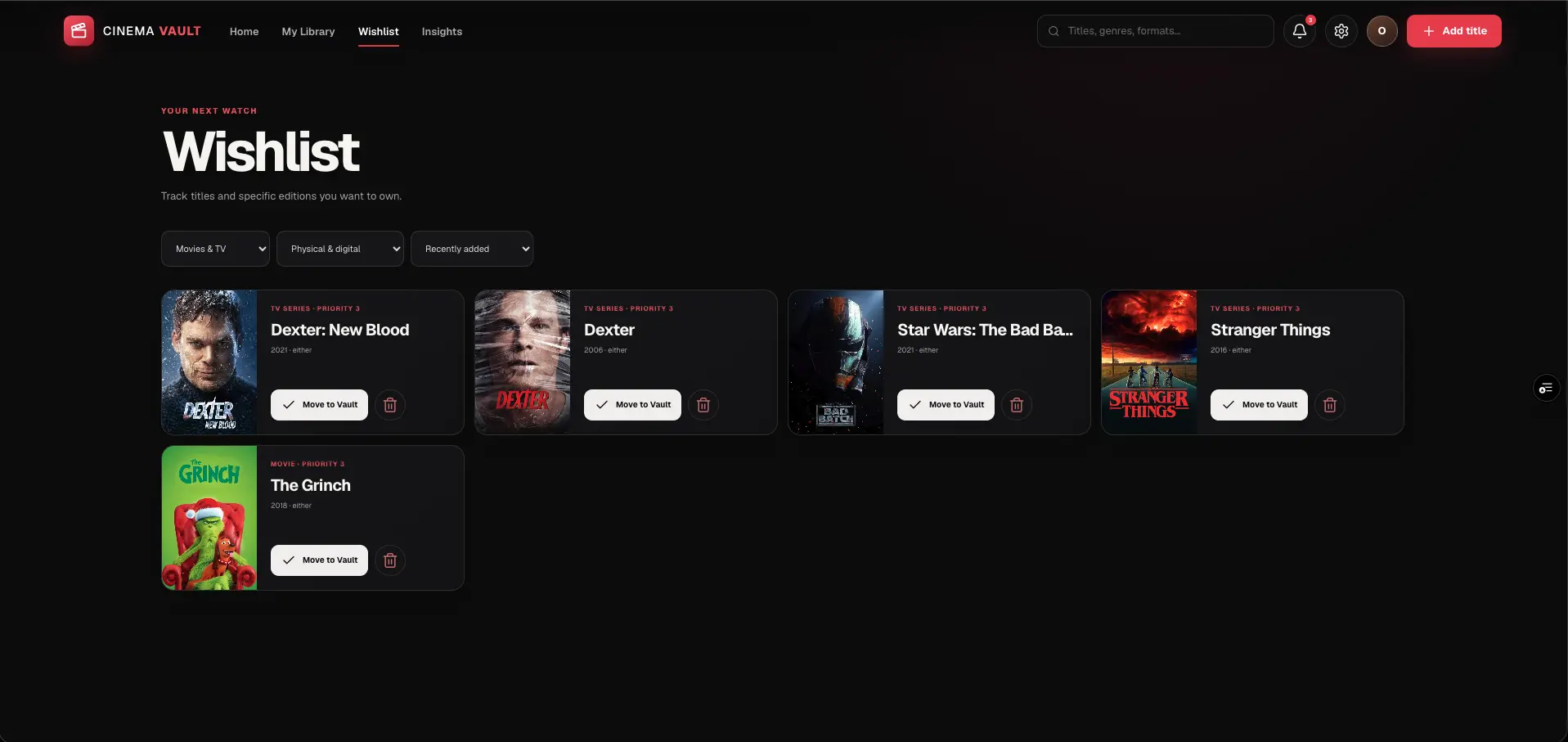
Wishlist → Ownership
Wishlist entries retain intended acquisitions for movies and television. They can carry preference and priority context, then move into the owned collection instead of forcing the user to re-enter the title from scratch.
The workflow protects continuity: enriched identity and acquisition intent survive the state change while the newly owned edition becomes authoritative.
Architecture
The architecture keeps authentication, authorization, business rules, database access, and external credentials on the server. TMDB enters through a separate enrichment path, so external metadata can assist the product without becoming the collection source of truth.
Experience
Browser / Next.js UI
Application boundary
Server-side application
Identity & access
Neon Auth + server authorization
Product rules
Domain / business logic
Persistence
Neon Postgres
External enrichment
TMDB → server enrichment layer
Deployment
Vercel
Engineering Decisions
01
Cinema Vault may become a commercial subscription product, so the repository remains private. This case study demonstrates architecture, product reasoning, screenshots, and verified outcomes without publishing the commercial blueprint.
02
The current architecture is intentionally owner-scoped. Multi-tenancy was deferred until an active commercialization need justifies the added isolation, onboarding, entitlement, and support complexity.
03
Identity and authorization are resolved on the server and enforced at the data boundary, keeping collection access rules independent of what the browser chooses to render.
04
TMDB reduces manual entry and improves discovery, but it does not own edition, wishlist, box-set, or acquisition state. The collection record remains authoritative.
05
Potential duplicate editions are surfaced for review instead of being silently collapsed. That preserves user intent when two copies share a title but differ in format, quality, packaging, or collection context.
Security & Release Readiness
Release hardening covered the application boundary, browser-facing behavior, dependency health, and repeatable validation—not just a final vulnerability scan.
Responsive Product Design
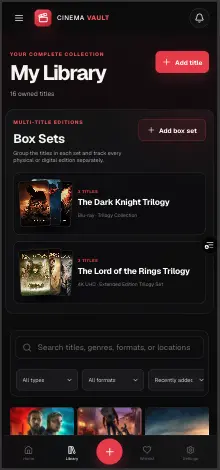
Mobile design preserves collection hierarchy, box-set management, search and filter access, poster browsing, clear navigation, and a fast add action. The UI is reorganized around touch and limited width rather than reduced to a squeezed desktop layout.
Outcome
Cinema Vault demonstrates product modeling, authenticated application architecture, relational persistence, external-service integration, responsive interface design, security hardening, automated validation, and production deployment as one coherent system.
Next Phase
If commercialization becomes active, the next architecture phase would add multi-tenancy, onboarding, billing and entitlements, tenant isolation, operational support, and expanded security policy. Those capabilities were intentionally not built before the product required them.
Work together
Continue the review
Review the hiring-focused experience profile, compare more project evidence, or contact Bryan directly about a full-time role or relevant enterprise engagement.
cashbryan.com is focused on Bryan's engineering career and selective enterprise consulting. Client website and product work lives at Dorsyth.